Modern travelers expect fast, clear access to information and services without having to rely entirely on the front desk or service staff. QR codes offer a simple, practical way for travel and hospitality businesses to connect guests with a full service ecosystem in a single scan.
From check-in instructions and room information to service bookings and feedback, QR codes are changing how accommodation providers operate and communicate with guests. Here is how they support a more modern hospitality experience.
QR Codes Support More Self-Directed Guest Experiences
One of the biggest shifts in tourism is the move from passive service models to more self-directed experiences. Travelers increasingly prefer to explore and use services on their own schedule rather than contacting staff for every request.
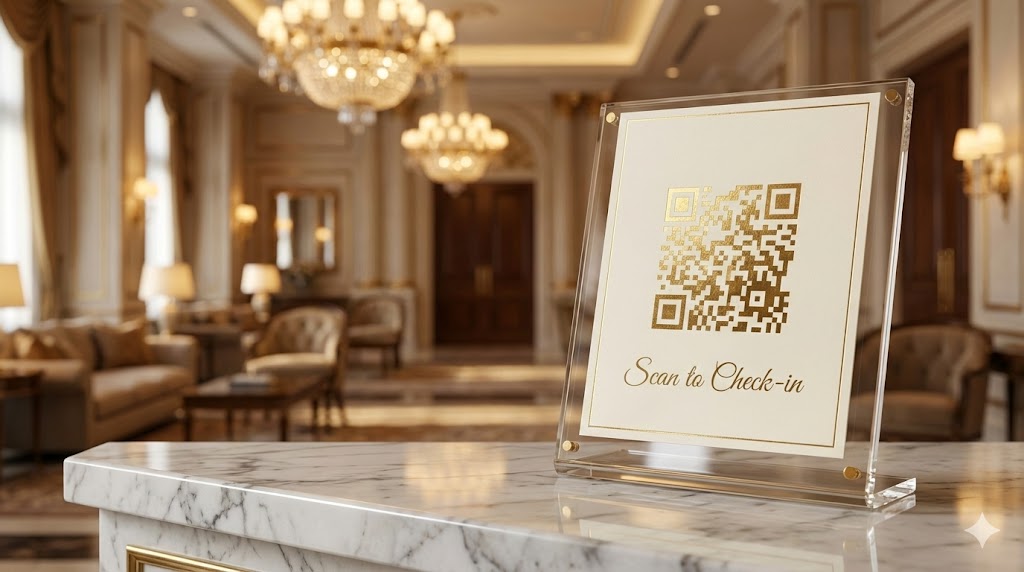
QR codes can provide immediate access to essential details, including check-in guides, house rules, facility hours, and local maps. Placed at reception, in guest rooms, or throughout shared spaces, they help guests find what they need quickly and independently.
Keep Service Information Consistent Across Locations
For hotel chains and multi-location resorts, keeping service information consistent can be challenging. Outdated or conflicting details can create a fragmented guest experience and harm the brand's reputation.
QR codes help standardize content across the business. When services, operating hours, or policies change, management can update the linked content once so guests at every location can access the latest information without reprinting materials or retraining staff.
Turn the Guest Room Into a Digital Concierge
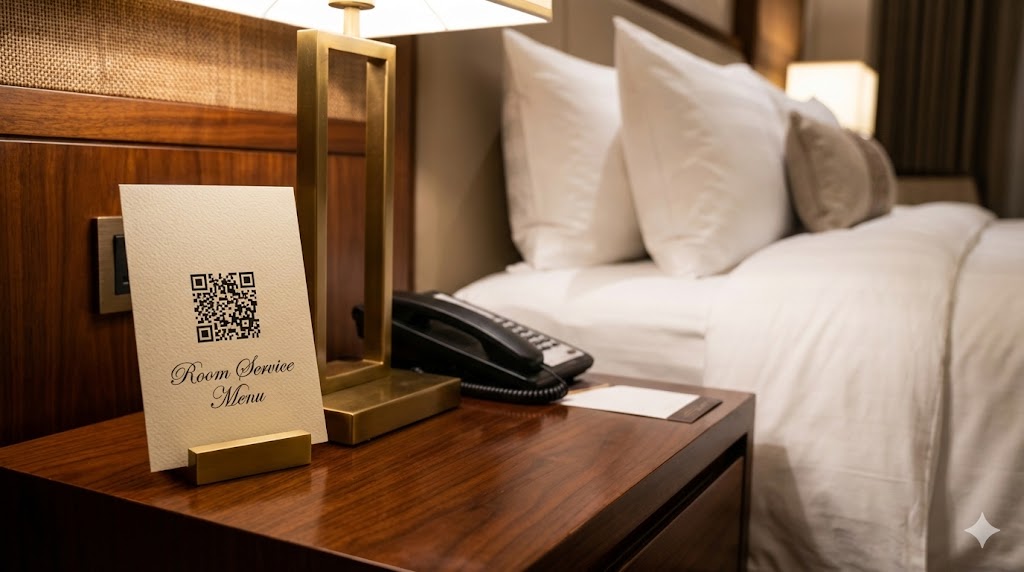
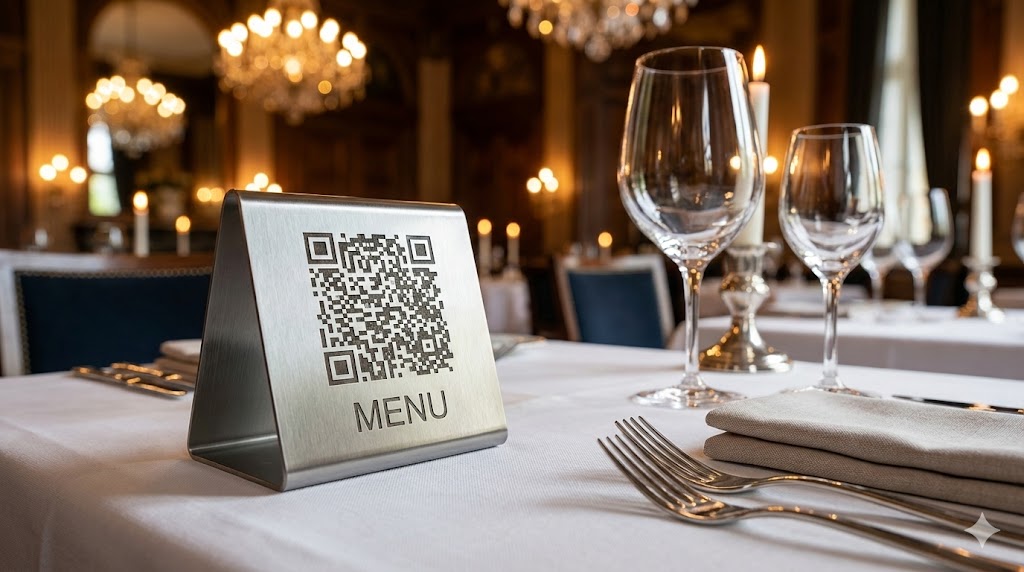
In the room, a QR code can function as a digital concierge. Instead of searching through paper directories or calling the front desk, guests can scan to view appliance manuals, service directories, dining menus, or housekeeping request options.
This approach lets guests relax with fewer interruptions while reducing unnecessary physical contact. It can also reduce repetitive calls, allowing hotel staff to work more efficiently.
Make It Easier to Book Additional Services
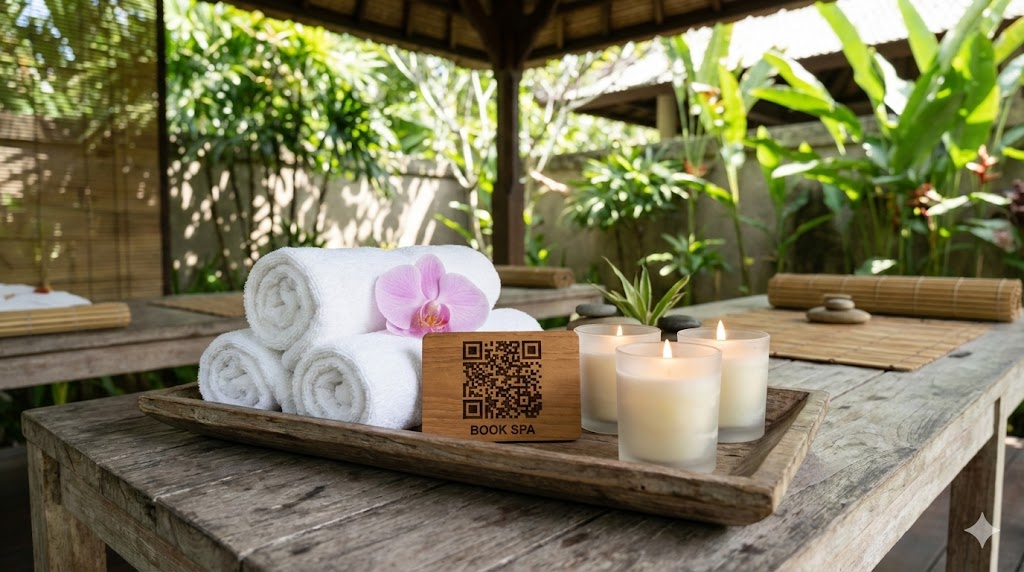
QR codes do more than deliver information; they can also support upselling. Guests can scan a code to browse and book additional services such as spa treatments, local tours, restaurant reservations, or airport transfers.
Showing these services while guests are relaxing or using hotel amenities can make the offer more relevant at that moment. Contextual suggestions typically generate higher booking rates than traditional marketing methods.
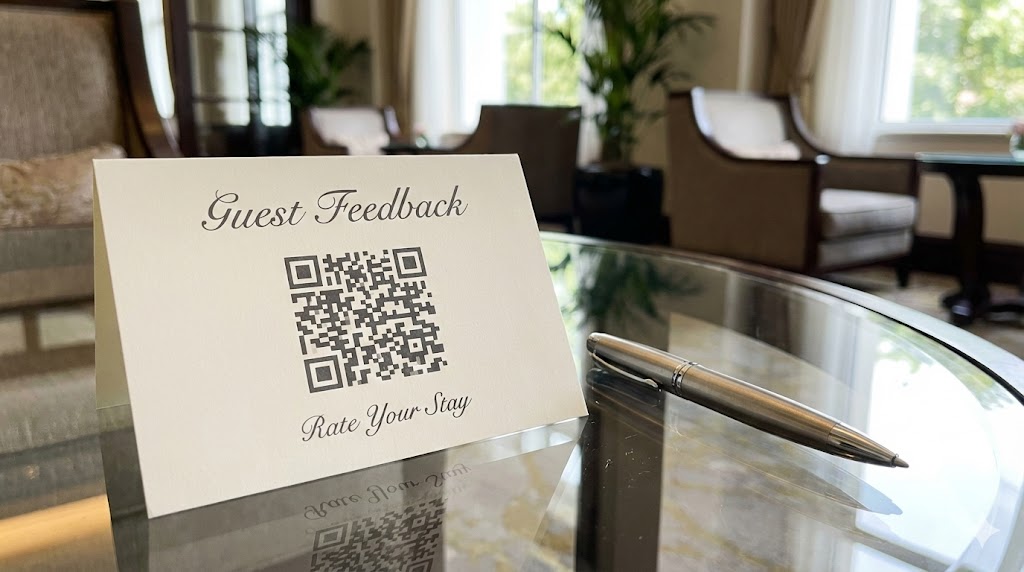
Collect Feedback While Guests Are Still On-Site
Guest feedback is essential to maintaining high service standards. QR codes allow accommodation providers to collect reviews and suggestions while guests are still on the property, rather than waiting until after checkout.
Early feedback gives hotels the opportunity to address issues immediately and recover the guest experience, which can increase the likelihood of positive reviews on travel platforms. The information collected can also help management make more informed service improvements.
Reduce Repetitive Work for Staff
One of the clearest benefits of QR codes is a reduced workload for staff. When guests can access information and services independently, the number of routine questions at the front desk or over the phone can drop significantly.
That gives staff more time to focus on high-value, personalized tasks and more attentive guest care. In large-scale operations, lower administrative overhead can lead to meaningful cost savings and more efficient management.
Use Dynamic QR Codes to Keep Services Current
Travel is seasonal, and programs, services, and policies often change. Dynamic QR codes let businesses update linked content instantly without replacing or reprinting the physical codes already in use.
Many providers use professional QR management platforms such as Qrcode-gen to create and manage dynamic codes, track scan data, and keep service information accurate and up to date.
A Key Part of the Modern Travel Experience
From booking through the end of a trip, QR codes can support multiple touchpoints across the guest journey. Used effectively, they can streamline operations while reinforcing the image of a modern, professional, guest-focused property.
Properties that implement QR codes effectively typically see higher satisfaction levels and stronger long-term guest retention.
By adopting a structured QR code strategy, accommodation providers can standardize service delivery, simplify operations, and improve the quality of guest care in an increasingly competitive market.